7 Steps to Start Trading Futures Like a Live Day Trading Desk
Want articles like this for your own video to promote it on YouTube and Google? Order them through the Telegram bot @sat_sit_bot. It writes articles around your video, embeds the video and publishes them on popular niche websites (no ads). Try it free: 50 articles on us.
· based on the channel Patrick Wieland
Trading is the business of buying and selling a financial instrument to profit from price movement, and in futures day trading that means opening and closing contracts inside a single session while managing risk on every order. A trader can start with a plan, a small account and one instrument, then scale only after the process works. The material below builds on the live futures format popularized by the BDH desk on the Patrick Wieland channel, where sessions run in real time rather than as edited highlights.
What trading futures on a live desk actually involves
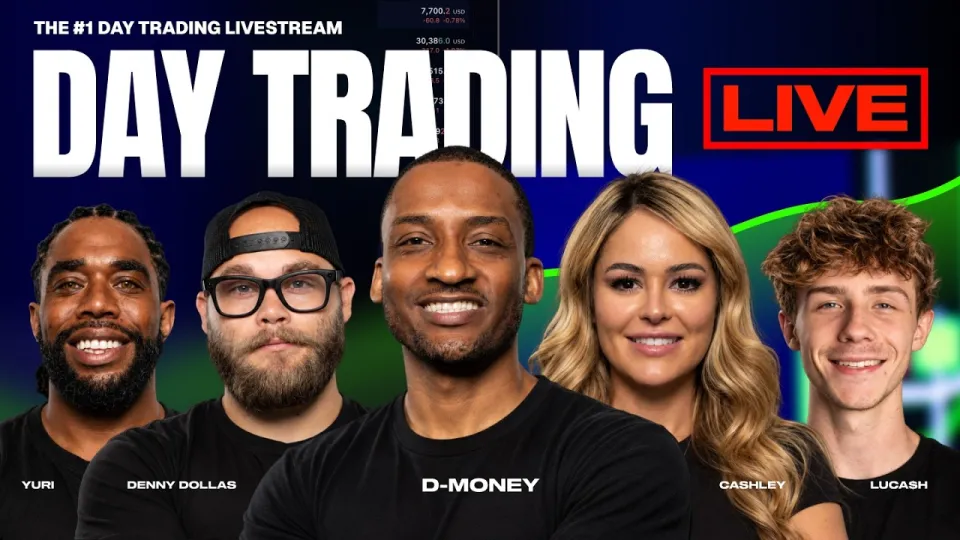
Futures are standardized contracts tied to an index, commodity or currency, and day traders typically work the most liquid index products: ES on the S&P 500, NQ on the Nasdaq 100, YM on the Dow, plus micro versions such as MES and MNQ that carry one tenth of the risk per point. A live desk is simply a group of traders working those instruments at the same time, usually through the New York open and the first two hours of the session, when volume and range are highest. The BDH crew — Patrick Wieland, Damareous Young, Lucas Kennard and Denny Jones — streams from South Florida and California, and the format is unedited: entries, exits and mistakes happen on camera. That matters for anyone learning, because a recorded highlight reel hides the waiting, the skipped setups and the losing trades that make up most of a normal day.
7 steps to build a repeatable trading process
- Choose one instrument and learn its behavior. Pick ES or NQ, or the micro version if the account is small, and track how it moves at the open, at the lunch lull and into the close. Switching instruments every day resets the learning curve.
- Define the setup in writing. A setup is a specific, testable condition, not a feeling: a level, a time window, a trigger. If it cannot be described in two sentences, it is not a setup yet.
- Set risk per trade before entry. A common rule is 1% of the account or less, with a hard stop placed at the moment of entry. On a 50,000 dollar evaluation account that is roughly 500 dollars of risk, which on ES is a few points depending on contract size.
- Cap the day, not just the trade. A maximum daily loss — often two or three times the per-trade risk — ends the session automatically. Most blown accounts die from a string of revenge trades after a bad open, not from one bad idea.
- Journal every trade with a screenshot. Record the reason for entry, the result and the emotion. After 50 trades the journal shows which setup actually pays and which one only feels good.
- Trade a fixed schedule. Futures day traders work specific windows; the first 60 to 90 minutes after the 9:30 a.m. Eastern open and the final hour are the most common. Trading outside the window adds noise, not opportunity.
- Review weekly and change one variable at a time. Adjusting size, instrument and timeframe simultaneously makes the result unreadable.
How prop firm accounts change the trading equation
The prop firm model lets a trader operate a funded futures account without risking personal capital, in exchange for passing an evaluation and splitting profits. The description of the BDH stream lists a ranking of firms the desk works with, including Lucid Trading, TakeProfitTrader, Apex Trader Funding, Tradeify, Legends Trading, BluSky Trading, TradeDay and MyFundedFutures, with discount links and comparisons collected on OnlyPropFirms.com. The economics are simple: an evaluation typically requires a profit target in the 6 to 8 percent range, a trailing or end-of-day drawdown limit around 4 to 5 percent, a daily loss cap, and a minimum number of trading days. Rules differ by firm on whether news trading, overnight holds and automation are allowed, so the contract matters more than the marketing page. Two practical warnings apply. First, a funded account is not free money — the drawdown rules can end an account faster than a personal account would. Second, payouts depend on the firm's payout schedule and consistency rules, which vary widely.
Copy trading, signal groups and the question of whose risk it is
Copy trading and signal services let a trader mirror someone else's orders, and the appeal is obvious for beginners. The trade-off is that position sizing, stop placement and exit timing all move to the other party, and the follower still carries the loss. A signal that suits a 150,000 dollar account can be far too large for a 5,000 dollar account. If copy trading is used at all, the sensible approach is to cap the allocation, verify a track record over months rather than days, and understand whether the provider trades the same instrument and session being copied. The same logic applies to paid courses: the BDH stream promotes a two-hour course at 99 dollars that covers the strategy traded live on air, and the honest test of any course is whether it produces a written plan with defined entries, stops and risk limits that a student can execute alone.
Common questions from live trading audiences
Viewers of live futures streams tend to ask the same two things: what setup is being traded right now, and where the exact setup can be bought. The first question is really about process — a live entry usually combines a level, a time of day and a confirmation trigger, and the trader has to see all three before clicking. The second question reflects a misunderstanding: a setup is not a product but a rule set, and the same rule set produces different results for different traders depending on discipline and size. Other recurring themes are position size on a small account, how to handle a losing streak, and whether a prop firm evaluation can be passed while working a full-time job. The last one is realistic only with a fixed session window and a strict daily loss cap, because fatigue is the main cause of rule breaks.
Risk, discipline and the honest expectations of day trading
The uncomfortable truth about day trading futures is that most retail traders lose money, and leverage is the reason. A single ES contract controls roughly 50 dollars per point of index movement, so a 20-point move is about 1,000 dollars in either direction. That math cuts both ways, and it is why professionals obsess over risk per trade rather than profit targets. A realistic first goal is not a monthly income but a positive expectancy over 100 trades with small size. The BDH disclaimer says the same thing in different words: content is educational and entertainment, affiliate links may generate commissions, and past performance does not guarantee future results. Anyone buying a prop firm account or placing a futures trade should treat the money as risk capital and verify the rules directly with the firm.
Final thoughts on learning trading from a live desk
Live futures streams are useful precisely because they are unedited: the waiting, the skipped setups and the losing trades are visible alongside the winners. The Patrick Wieland channel and the BDH crew have built one of the most-watched formats in that space, with daily sessions covering real-time futures trading, market analysis and prop firm reviews. The value for a viewer is not a signal to copy but a template to adapt: one instrument, one written setup, fixed risk, a daily loss cap and a journal. Build that structure first, prove it over a hundred small trades, and only then consider scaling size or taking an evaluation. Everything else — rankings, discounts, copy trading — is secondary to the process.
Key takeaways
- A live futures desk trades the same instruments every session: index futures such as ES, NQ and YM, plus micros like MES and MNQ for smaller risk.
- Prop firm evaluations are pass/fail: typical targets are 6-8% profit with a 4-5% trailing or end-of-day drawdown limit and a daily loss cap.
- The BDH stream with Patrick Wieland runs live every trading day, covering real-time futures trading, market analysis and prop firm reviews.
- Copy trading and signal groups shift execution to someone else, which changes risk control but does not remove the risk of loss.
- A written trading plan with entry, stop, target and maximum daily loss is the difference between a repeatable process and gambling.
Source: LIVE DayTrading! #1 Watched Futures Trading Show! · Markdown version